

Introduction: The Digital Gamble That Changed Everything
Online betting has emerged as one of the most powerful and controversial trends of the digital age. What was once limited to physical casinos and local bookmakers has now evolved into a global industry accessible to anyone with a smartphone and an internet connection. With just a few taps, users can place bets on sports matches, casino games, and virtual events from the comfort of their homes.
The appeal of online betting lies in its simplicity and excitement. It promises quick rewards, adrenaline-pumping experiences, and the possibility of turning small amounts of money into significant gains. For many, it serves as a form of entertainment that enhances their engagement with sports and games. However, beneath this attractive surface lies a more complex reality.
The same features that make online betting appealing—instant access, fast transactions, and continuous availability—also make it risky. Many individuals find themselves drawn into a cycle of repeated betting, where the line between entertainment and dependency becomes blurred. Financial losses, emotional stress, and addictive behavior are common challenges faced by users who fail to maintain control.
As online betting continues to grow, it becomes increasingly important to understand both its benefits and its dangers. This discussion aims to provide a clear and balanced introduction to the world of online betting, highlighting not only its opportunities but also the serious consequences it can bring if approached without caution.
The Evolution of Online Betting: From Tradition to Technology
Online betting did not appear overnight—it is the result of a long evolution that blends traditional gambling practices with modern technology. In the past, betting was largely confined to physical spaces such as casinos, racetracks, and local bookmakers. These environments required physical presence, limited participation, and often involved strict regulations depending on the region.
The transition began with the rise of the internet in the late 20th century. Early online betting platforms were basic and lacked user-friendly interfaces, but they introduced a revolutionary concept: the ability to gamble remotely. As technology advanced, these platforms became more sophisticated, offering secure payment systems, real-time updates, and a wider range of betting options.
The introduction of smartphones marked a turning point. Mobile applications made online betting more accessible than ever before, allowing users to place bets anytime and anywhere. Live betting, where users can wager during an ongoing match, further increased engagement by adding a dynamic, real-time element to the experience.
Another significant development has been the integration of data analytics and artificial intelligence. Modern platforms provide users with detailed statistics, predictive insights, and personalized recommendations. While these tools can enhance decision-making, they also encourage continuous participation, keeping users engaged for longer periods.
Additionally, the rise of digital payment methods—including e-wallets, instant bank transfers, and cryptocurrencies—has made transactions faster and more convenient. This seamless flow of money removes traditional barriers, making it easier for users to deposit and withdraw funds without hesitation.
However, this rapid evolution has also introduced new challenges. The same technology that improves accessibility and convenience can also increase the risk of impulsive behavior. With fewer restrictions and constant availability, users may find it difficult to maintain control over their betting habits.
In essence, the evolution of online betting reflects the broader impact of digital transformation. It has turned a once localized activity into a global, always-on industry—bringing both unprecedented opportunities and significant risks along with it.
Why People Are Attracted to Online Betting
The growing popularity of online betting is not accidental—it is driven by a combination of psychological, social, and technological factors that make it highly appealing to a wide range of users. Understanding these attractions helps explain why millions of people engage in betting despite the known risks.
1. The Excitement of Uncertainty
At the core of online betting lies uncertainty, and for many people, this unpredictability is thrilling. The possibility of winning creates an adrenaline rush that keeps users engaged. Every bet carries the anticipation of a positive outcome, making even ordinary events feel more intense and exciting.
2. The Promise of Quick Money
One of the strongest attractions is the idea of earning money quickly. Unlike traditional jobs or investments that require time and effort, online betting offers the illusion of instant financial gain. A small bet can potentially turn into a large payout, which is highly tempting—especially for those looking for easy income opportunities.
3. Accessibility and Convenience
Online betting platforms are designed for ease of use. With simple interfaces, quick sign-ups, and instant payment options, anyone can start betting within minutes. The ability to access these platforms 24/7 from mobile devices removes all traditional barriers, making participation effortless.
4. Influence of Advertising and Promotions
Aggressive marketing plays a major role in attracting users. Advertisements often highlight big wins, success stories, and attractive bonuses, creating a perception that winning is common and achievable. Welcome offers, free bets, and cashback deals further encourage people to try their luck.
5. Social Influence and Peer Pressure
Friends, social media, and online communities also contribute to the popularity of betting. Seeing others share their wins or discuss strategies can create a sense of curiosity and pressure to participate. In some cases, betting becomes a social activity rather than an individual choice.
6. Skill-Based Illusion
Many platforms promote betting as a skill-based activity, especially in sports and fantasy leagues. While knowledge and analysis can improve decision-making, outcomes are still largely unpredictable. This illusion of control makes users believe they can consistently win, encouraging repeated participation.
7. Escapism and Emotional Relief
For some individuals, online betting serves as a form of escape from daily stress, boredom, or personal problems. The focus on games and potential rewards provides temporary relief from reality. However, this coping mechanism can become harmful if it leads to dependency.
8. Continuous Engagement Features
Modern platforms are designed to keep users engaged through:
- Live betting options
- Instant results
- Notifications and reminders
- Loyalty rewards and rankings
These features create a cycle where users are constantly encouraged to return and place more bets.
Final Thought on Attraction
The appeal of online betting is a powerful mix of excitement, convenience, and psychological triggers. While these factors make it entertaining and engaging, they also increase the risk of over-involvement. What begins as a casual activity can quickly evolve into a habit if not approached with awareness and control.
Types of Online Betting Platforms
Online betting is not limited to a single format—it includes a wide variety of platforms designed to cater to different interests, preferences, and skill levels. Each type offers a unique experience, combining elements of chance, strategy, and entertainment. Understanding these categories helps users recognize how diverse and expansive the online betting world has become.
1. Sports Betting Platforms
Sports betting is one of the most popular forms of online betting. Users place wagers on the outcomes of various sports events such as cricket, football, basketball, and tennis.
Common betting options include:
- Match winners
- Player performance
- Score predictions
- Live or in-play betting
This type of betting often attracts sports enthusiasts who believe their knowledge of the game can give them an advantage.
2. Online Casino Platforms
Online casinos replicate the experience of physical casinos in a digital format. They offer a range of games, including:
- Poker
- Blackjack
- Roulette
- Slot machines
Many platforms also feature live dealers, creating a more immersive and realistic experience. While some games involve strategy, most are based on luck, making outcomes unpredictable.
3. Fantasy Sports Platforms
Fantasy sports combine betting with strategic gameplay. Users create virtual teams based on real players and earn points depending on their performance in actual matches.
This format emphasizes:
- Player selection
- Team management
- Statistical analysis
Fantasy sports are particularly popular among younger audiences and are often perceived as more skill-based compared to traditional betting.
4. Esports Betting Platforms
With the rise of competitive gaming, esports betting has gained significant traction. Users can place bets on popular games such as:
- Multiplayer battle arenas
- First-person shooters
- Strategy games
Esports betting appeals to a tech-savvy audience familiar with gaming culture and competitive tournaments.
5. Virtual Betting Platforms
Virtual betting involves computer-generated simulations of sports events. These events are not real but are designed to mimic actual matches using algorithms.
Key features include:
- Fast results (within minutes)
- Continuous availability
- Automated outcomes
While convenient, this type relies entirely on programmed systems rather than real-world events.
6. Peer-to-Peer Betting Exchanges
Unlike traditional platforms, betting exchanges allow users to bet against each other rather than against a bookmaker. These platforms act as intermediaries, facilitating wagers between participants.
Advantages include:
- Potentially better odds
- Greater control over bets
However, they may be more complex and require a deeper understanding of betting mechanics.
7. Cryptocurrency Betting Platforms
Some platforms accept cryptocurrencies as a form of payment. These platforms offer:
- Faster transactions
- Increased privacy
- Lower fees
While appealing to some users, they also come with risks such as price volatility and limited regulation.
Final Thought on Platform Types
The diversity of online betting platforms reflects the industry’s rapid growth and innovation. From traditional sports betting to modern virtual and crypto-based systems, there is something for everyone. However, each type comes with its own level of risk, and understanding these differences is essential for making informed decisions.
Risks and Dangers of Online Betting
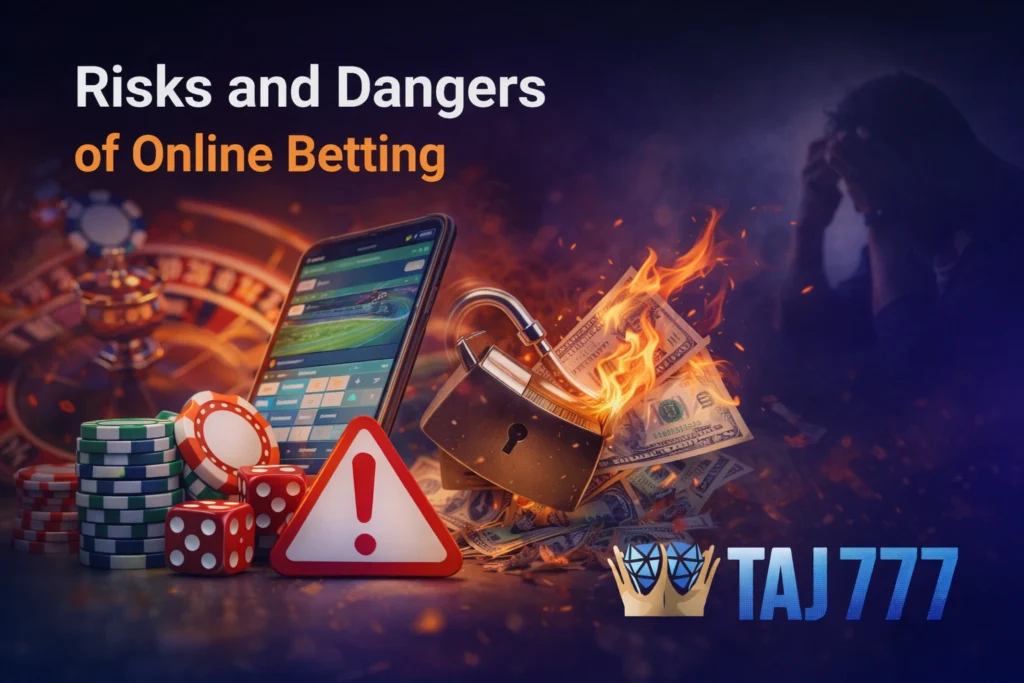
While online betting may appear exciting and rewarding, it carries a range of serious risks that can affect individuals financially, emotionally, and socially. These dangers are often underestimated, especially by new users who are drawn in by the promise of quick profits and easy access.
1. High Risk of Financial Loss
The most immediate and obvious danger of online betting is financial loss. Although winning is possible, the system is designed in a way that ensures long-term profits for the platform, not the user.
Common financial pitfalls include:
- Spending more than intended
- Increasing bet amounts after losses
- Misunderstanding odds and probabilities
Many users start with small amounts but gradually escalate their spending, leading to significant losses over time.
2. Addiction and Loss of Control
Online betting can quickly become addictive due to its continuous availability and instant rewards. Unlike traditional gambling, there are no physical barriers—users can place bets anytime, anywhere.
Signs of addiction may include:
- Inability to stop betting
- Obsessive thinking about bets
- Neglecting responsibilities
- Borrowing money to continue betting
Addiction can develop slowly, making it difficult for individuals to recognize the problem until it becomes severe.
3. Emotional and Mental Health Issues
Frequent losses and financial stress can have a deep impact on mental well-being. Users may experience:
- Anxiety and constant worry
- Depression due to repeated failures
- Frustration and anger
The emotional rollercoaster of winning and losing creates instability, often leading to unhealthy coping behaviors.
4. Fraud and Unreliable Platforms
Not all online betting platforms are trustworthy. In regions with weak regulation, users may encounter:
- Fake websites
- Manipulated games
- Delayed or denied withdrawals
Without proper verification, users risk losing their money without any legal protection.
5. Privacy and Security Risks
Online betting requires users to share personal and financial information. If platforms lack proper security measures, this data can be exposed or misused.
Potential risks include:
- Identity theft
- Unauthorized transactions
- Data breaches
Users who rely on unverified platforms are particularly vulnerable.
6. Impact on Personal Relationships
Problematic betting behavior often affects relationships with family and friends. Financial instability, secrecy, and emotional stress can lead to:
- Conflicts and arguments
- Loss of trust
- Social isolation
In extreme cases, individuals may withdraw completely from their social circles.
7. Legal and Regulatory Issues
Online betting laws vary widely across regions. In some places, it is fully legal and regulated, while in others it is restricted or banned.
Users may face:
- Legal penalties
- Account restrictions
- Lack of consumer protection
Operating in unclear legal environments increases the overall risk.
Final Thought on Risks
The dangers of online betting are real and often far-reaching. What begins as a harmless activity can quickly escalate into a serious problem affecting multiple aspects of life. Awareness of these risks is the first step toward making safer and more responsible choices.
Psychological Effects of Online Betting
Beyond financial risks, online betting has a deep and often underestimated impact on the human mind. The way betting platforms are designed interacts closely with human psychology, influencing behavior, decision-making, and emotional well-being. Over time, these psychological effects can shape habits that are difficult to break.
1. The Dopamine Effect and Reward Cycle
When a person wins a bet, the brain releases dopamine—a chemical associated with pleasure and reward. This creates a feeling of excitement and satisfaction, encouraging the individual to repeat the behavior.
However, the cycle does not depend only on winning. Even the anticipation of a result can trigger similar responses. This means users may continue betting not just for profit, but for the emotional “high” it provides.
2. The Illusion of Control
Many bettors believe that their knowledge, strategies, or instincts can influence outcomes. This is especially common in sports betting and fantasy leagues.
While skill can improve predictions, outcomes often depend on unpredictable factors. This illusion of control leads users to overestimate their chances of winning and continue betting even after repeated losses.
3. The Near-Miss Phenomenon
One of the most powerful psychological triggers in betting is the “near-miss.” When a user almost wins, it creates the feeling that success is just within reach.
Instead of discouraging further attempts, near-misses often motivate users to keep betting, reinforcing the cycle of participation.
4. Chasing Losses
Loss aversion is a strong psychological force—people tend to feel losses more intensely than gains. As a result, many bettors try to recover lost money by placing more bets.
This behavior, known as “chasing losses,” often leads to:
- Larger and riskier bets
- Increased financial damage
- Emotional distress
It becomes a dangerous cycle where each loss fuels further betting.
5. Emotional Dependence
Over time, some users begin to rely on betting as a source of emotional relief. It may serve as a distraction from stress, loneliness, or boredom.
This dependence can lead to:
- Reduced interest in other activities
- Difficulty coping without betting
- Increased vulnerability to addiction
6. Distorted Thinking Patterns
Frequent betting can alter how individuals think and make decisions. Common distortions include:
- Believing that a win is “due” after a series of losses
- Overvaluing past successes
- Ignoring the role of chance
These patterns reduce rational thinking and encourage impulsive behavior.
7. Stress and Mental Exhaustion
Constant engagement with betting—tracking results, analyzing outcomes, and managing losses—can lead to mental fatigue.
Users may experience:
- Difficulty concentrating
- Sleep disturbances
- Increased irritability
Over time, this can affect both personal and professional life.
Final Thought on Psychological Impact
The psychological effects of online betting are subtle but powerful. They often develop gradually, making them difficult to recognize until they begin to interfere with daily life. Understanding these mental patterns is essential for maintaining control and preventing long-term harm.
Responsible Betting Practices: Staying in Control

While online betting comes with significant risks, it is possible to engage in it responsibly if clear boundaries and disciplined habits are maintained. Responsible betting is not about eliminating risk entirely, but about managing behavior in a way that prevents harm and ensures that betting remains a controlled form of entertainment rather than a destructive habit.
1. Set Clear Financial Limits
Before placing any bet, it is essential to decide how much money you are willing to spend—and potentially lose. This amount should always be affordable and separate from essential expenses such as rent, food, or bills.
Practical steps include:
- Creating a fixed betting budget
- Avoiding the use of borrowed money
- Stopping immediately once the limit is reached
2. Manage Your Time
Online betting platforms are available 24/7, making it easy to lose track of time. Setting time limits helps prevent excessive engagement and reduces the risk of developing unhealthy habits.
Consider:
- Allocating specific time slots for betting
- Taking regular breaks
- Avoiding late-night or impulsive betting sessions
3. Avoid Chasing Losses
One of the most important rules of responsible betting is to accept losses as part of the experience. Trying to recover lost money often leads to bigger losses and emotional stress.
Instead:
- Accept outcomes calmly
- Stick to your pre-set budget
- Walk away after a loss
4. Keep Emotions Out of Decisions
Betting decisions should be based on logic rather than emotions. Placing bets when feeling stressed, angry, or overly excited can lead to impulsive and risky choices.
Maintain control by:
- Taking a pause before placing a bet
- Avoiding betting during emotional highs or lows
- Staying focused on rational thinking
5. Treat Betting as Entertainment, Not Income
Online betting should never be considered a reliable source of income. Viewing it as entertainment reduces unrealistic expectations and helps maintain a healthier mindset.
This perspective:
- Lowers financial pressure
- Reduces emotional dependency
- Encourages moderation
6. Be Aware of Warning Signs
Recognizing early signs of problematic behavior is crucial. Some warning signs include:
- Spending more time and money than planned
- Feeling anxious or restless when not betting
- Hiding betting activities from others
Identifying these signs early allows for timely action.
7. Use Platform Safety Tools
Many online betting platforms offer features designed to promote responsible use, such as:
- Deposit limits
- Time reminders
- Self-exclusion options
Using these tools can help users stay within safe boundaries.
8. Seek Help When Necessary
If betting begins to feel uncontrollable, seeking help is a responsible and important step. Support can come from:
- Professional counselors
- Support groups
- Trusted friends or family members
Early intervention can prevent more serious consequences.
Conclusion: A Balance Between Opportunity and Risk
Online betting is a powerful example of how technology can transform traditional activities into global, accessible experiences. It offers excitement, convenience, and the possibility of financial gain, making it attractive to millions of users worldwide. For some, it remains a harmless form of entertainment that adds enjoyment to sports and games.
However, the risks associated with online betting cannot be ignored. Financial losses, addiction, psychological stress, and social consequences are real challenges that many individuals face. The very features that make online betting appealing—speed, accessibility, and constant availability—also make it potentially dangerous.
The key to navigating this world lies in awareness and self-control. Understanding how online betting works, recognizing its psychological impact, and following responsible practices can help individuals avoid its most harmful effects. At the same time, stronger regulations and ethical platform designs are necessary to protect users and promote safer environments.
Ultimately, online betting is neither entirely good nor entirely bad. It exists as a double-edged phenomenon—capable of providing enjoyment and opportunity, but also capable of causing serious harm. The difference depends on how it is approached, managed, and understood.
Final Reflection: Awareness Is the Real Winning Strategy
In the fast-paced world of online betting, it is easy to get carried away by the promise of quick rewards and constant excitement. The digital environment is designed to be engaging, immersive, and often persuasive—making it difficult for users to step back and evaluate their actions objectively. This is why awareness becomes the most powerful tool any individual can have.
Understanding that online betting is not a guaranteed path to success, but rather a risk-based activity, is essential. The idea of “easy money” is often an illusion, shaped by selective success stories and strategic marketing. In reality, long-term outcomes tend to favor the platforms, not the players. Recognizing this truth can help users approach betting with a more realistic mindset.
Equally important is self-discipline. Setting boundaries, knowing when to stop, and resisting impulsive decisions are critical skills that can protect individuals from the negative consequences of betting. Without these controls, even occasional participation can gradually turn into a harmful pattern.
Education also plays a key role. The more individuals understand about probability, risk, and psychological triggers, the better equipped they are to make informed decisions. Awareness reduces vulnerability and empowers users to stay in control of their actions.
At a broader level, society must also contribute by promoting responsible practices, encouraging open conversations about gambling risks, and supporting those who may be struggling. Reducing stigma around addiction can make it easier for individuals to seek help without fear or shame.
In the end, the true “win” in online betting is not about money—it is about maintaining control, protecting well-being, and making conscious choices. Whether one chooses to participate or stay away, the most important factor is awareness. Because in a system built on uncertainty, clarity of mind is the only real advantage.
Frequently Asked Questions (FAQs) About Online Betting
1. What is online betting?
Online betting is the process of placing wagers on sports, casino games, or virtual events using internet-based platforms. It allows users to participate from anywhere using mobile apps or websites.
2. Is online betting legal?
The legality of online betting depends on the country or region you are in. Some places fully regulate it, while others restrict or ban it. It is always important to check local laws before participating.
3. Can I really make money from online betting?
Yes, it is possible to win money, but it is not guaranteed. Most platforms are designed to ensure long-term profit for the operator. Consistent earnings require skill, discipline, and risk management—and even then, losses are common.
4. How can I choose a reliable betting platform?
When selecting a platform, look for:
- Proper licensing and regulation
- Secure payment options
- Positive user reviews
- Transparent terms and conditions
For example, you can explore platforms like taj777 to understand how online betting services are structured.
5. What are the risks of online betting?
The main risks include:
- Financial losses
- Addiction
- Mental stress
- Exposure to fraudulent platforms
Being aware of these risks helps in making safer decisions.
6. How can I bet responsibly?
Responsible betting involves:
- Setting time and money limits
- Avoiding emotional decisions
- Treating betting as entertainment, not income
- Taking breaks and knowing when to stop
7. Are there safer alternatives to betting?
Yes, there are many safer ways to enjoy games and competition without financial risk. For example, platforms like yobook offer engaging experiences without the pressure of losing money.
8. What should I do if I feel addicted to betting?
If you feel that betting is becoming a problem:
- Stop immediately
- Talk to someone you trust
- Seek professional help or counseling
- Use self-exclusion tools on betting platforms
Final Note
Online betting can be entertaining, but it requires awareness, discipline, and caution. Always prioritize your financial safety and mental well-being over temporary excitement.