
Popular Games: A New Era of Digital Entertainment
In today’s fast-moving digital world, popular games have become more than just a way to pass time—they are a powerful form of global entertainment. From mobile screens to high-end gaming consoles, millions of people engage with games daily, making them a central part of modern lifestyle and culture. Whether it’s competing in online multiplayer battles, exploring virtual worlds, or simply enjoying quick casual gameplay, popular games now offer something for everyone.
What makes popular games so influential is their ability to connect people, create immersive experiences, and continuously evolve with technology. They are no longer limited by geography or age, bringing together players from different backgrounds into shared digital spaces. At the same time, their growing popularity raises important questions about their impact on our habits, health, and social lives.
As the gaming industry continues to expand, understanding the true nature of popular games becomes essential. Are they just a source of fun and creativity, or do they carry deeper effects that we often ignore? This article explores both sides, offering a balanced view of one of the most powerful trends in the online gaming world.
The Evolution of Popular Games
The journey of popular games from simple beginnings to today’s advanced digital experiences is nothing short of remarkable. In the early days, games were limited by basic graphics and simple mechanics. They were often played solo, with little to no interaction beyond the screen. However, as technology progressed, so did the complexity and appeal of games.
The introduction of the internet completely transformed gaming. Popular games shifted from offline experiences to dynamic online platforms where players could compete and collaborate in real time. This change didn’t just improve gameplay—it created entire communities. Players were no longer isolated; they became part of a global network.
Mobile technology pushed this evolution even further. With smartphones becoming widely accessible, popular games reached audiences who had never considered gaming before. Suddenly, gaming was not limited to a specific device or location—it became something people could enjoy anytime, anywhere.
Another major shift came with the rise of live streaming and content creation. Watching others play games became just as popular as playing them. This added a new layer to gaming culture, where entertainment, competition, and personality all merged into one experience.
Today, popular games are driven by constant innovation. Developers regularly update content, introduce new features, and listen to player feedback to keep games engaging. As a result, gaming is no longer a static experience—it’s a continuously evolving digital world.
This evolution shows that popular games are not just growing—they are redefining entertainment itself.
Why Popular Games Capture Millions of Players
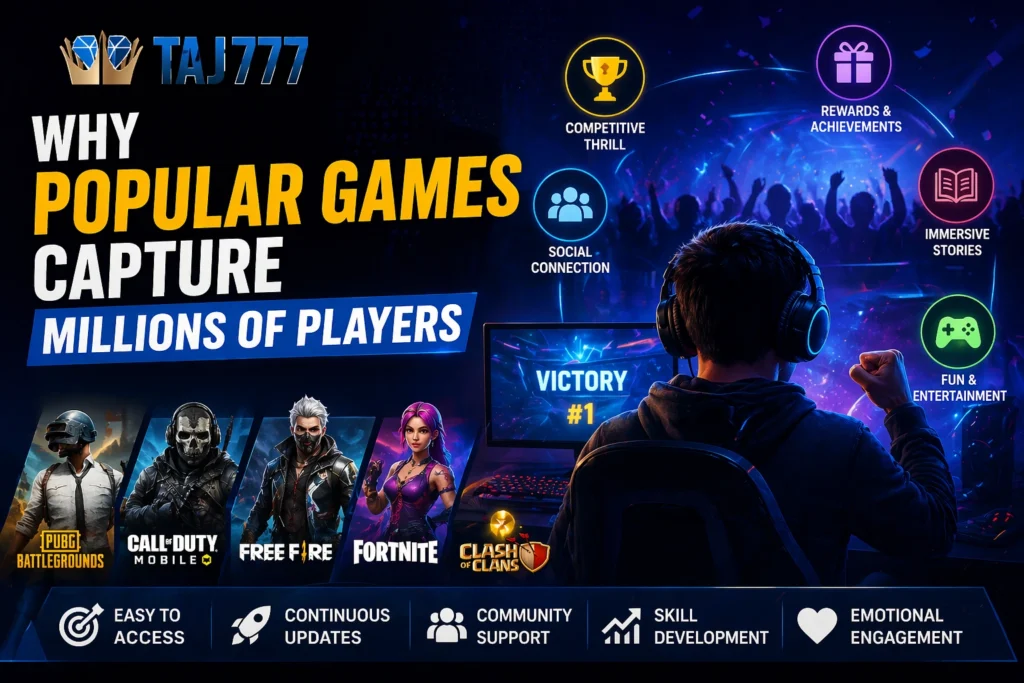
The success of popular games is not accidental—it is carefully designed. Every element, from visuals to gameplay mechanics, is created to keep players engaged for as long as possible. This is what makes popular games so powerful in today’s digital landscape.
One of the main reasons behind their appeal is instant engagement. Players can jump into a game within seconds and start experiencing action, rewards, or challenges immediately. There’s no long waiting period, which makes games highly attractive in a fast-paced world.
Another key factor is the sense of progress and achievement. Popular games often include levels, rankings, rewards, and unlockable content. These features give players a clear goal and a constant sense of accomplishment, encouraging them to keep playing.
Social connection also plays a huge role. Many popular games are built around multiplayer experiences where players can team up, compete, or communicate in real time. This transforms gaming into a shared activity rather than a solo one, making it more engaging and emotionally rewarding.
Additionally, developers use psychological triggers such as daily rewards, limited-time events, and competitive rankings. These elements create urgency and excitement, making players feel like they need to return regularly to stay ahead or not miss out.
Visual design and storytelling further enhance the experience. High-quality graphics, immersive sound effects, and compelling narratives draw players deeper into the game world, making it feel real and meaningful.
All these factors combine to make popular games incredibly engaging—but they also explain why it can sometimes be difficult for players to step away.
The Positive Impact of Popular Games
While popular games are often criticized, they also offer meaningful benefits that deserve attention. When used responsibly, games can enhance skills, improve mental well-being, and even create new opportunities.
One of the most notable advantages is cognitive development. Many popular games require players to think quickly, plan strategies, and solve complex problems. This constant mental engagement can improve memory, focus, and decision-making abilities over time.
Popular games also encourage teamwork and communication. In multiplayer environments, players must coordinate, share information, and work together to achieve goals. These interactions can strengthen communication skills and teach the value of collaboration.
Another important benefit is stress relief. For many people, gaming provides a break from daily pressures. Entering a virtual world can help players relax, reset their minds, and temporarily escape from real-life challenges.
In addition, popular games have opened doors to career opportunities. The rise of esports, game streaming, and content creation has transformed gaming into a professional field. Many individuals now earn a living through competitive gaming, online platforms, or by creating gaming-related content.
Creativity is another area where games shine. Some popular games allow players to build, design, and experiment freely, encouraging imagination and innovation.
Overall, popular games can be a powerful and positive force—but only when they are enjoyed in a balanced and mindful way.
The Dark Side of Popular Games
Despite their many benefits, popular games also come with serious drawbacks that cannot be ignored. As their influence continues to grow, so do the concerns surrounding their impact on individuals and society.
One of the biggest issues is addiction. Popular games are designed to keep players engaged for long periods, often using reward systems and competitive elements that make it difficult to stop. For some players, this can lead to excessive gaming habits that interfere with daily responsibilities, sleep, and overall well-being.
Another concern is social isolation. While online games connect people virtually, they can sometimes reduce real-life interactions. Players may spend more time in digital environments than with family or friends, which can affect relationships over time.
Financial pressure is also a growing problem. Many popular games include in-game purchases, such as skins, upgrades, or special items. These microtransactions can encourage players—especially younger ones—to spend more money than intended.
Health issues are another downside. Long gaming sessions can lead to eye strain, poor posture, and a lack of physical activity. Over time, this can contribute to more serious health concerns.
There is also ongoing debate about the psychological effects of certain types of games. Some studies suggest that excessive exposure to intense or competitive gameplay may influence behavior, though this topic remains complex and widely discussed.
These challenges highlight an important truth: popular games are powerful, and without control, they can negatively affect different aspects of life.
Finding Balance in the World of Popular Games
The impact of popular games ultimately depends on how they are used. While they offer entertainment, connection, and even personal growth, they can also become overwhelming if not managed properly. This is why finding balance is essential.
Healthy gaming starts with self-awareness. Players need to recognize how much time they are spending on games and how it affects other areas of their lives. Setting clear limits can help prevent gaming from taking over daily routines.
Another important step is time management. Allocating specific hours for gaming—rather than playing endlessly—helps maintain a structured lifestyle. It ensures that work, studies, physical activity, and social interactions are not neglected.
Taking regular breaks is also crucial. Continuous screen time can strain both the mind and body. Short breaks between sessions can improve focus, reduce fatigue, and promote better overall health.
Players should also be mindful of spending habits. Many popular games encourage in-game purchases, so setting a budget can help avoid unnecessary financial stress.
Equally important is maintaining real-world connections. Spending time with family and friends outside of gaming helps create a healthy balance between digital and real-life experiences.
In the end, popular games are not the problem—imbalanced usage is. When approached with discipline and awareness, gaming can remain an enjoyable and positive part of life rather than a harmful habit.
The Future of Popular Games: Innovation, Immersion, and Uncertain Consequences
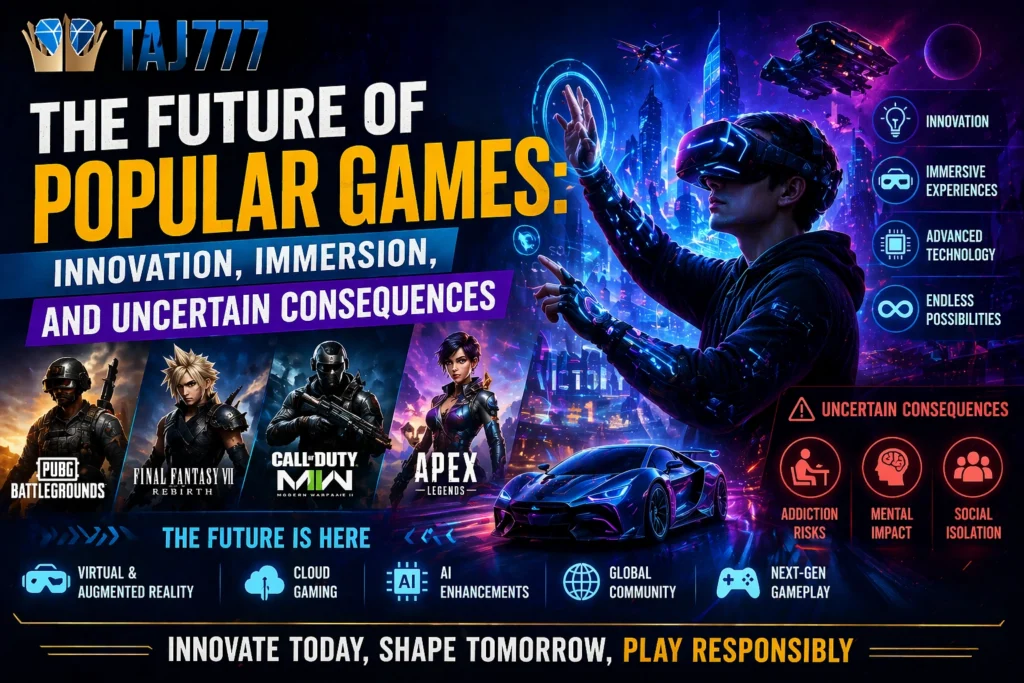
The future of popular games is not just about better graphics or faster performance—it is about redefining how humans experience reality itself. Gaming is rapidly moving beyond traditional screens and entering a space where the boundaries between the physical and digital worlds are becoming increasingly blurred.
One of the most significant developments shaping the future is immersive technology. Virtual reality (VR) and augmented reality (AR) are transforming popular games into fully interactive environments. Instead of simply controlling a character, players can be inside the game world. This level of immersion changes everything—from how stories are told to how emotions are experienced. Games are no longer just played; they are lived.
Another major shift is the rise of artificial intelligence (AI) in gaming. Future popular games will not rely solely on pre-programmed responses. Instead, AI-driven characters will adapt, learn, and respond to players in real time. This means every player’s experience could become unique, unpredictable, and deeply personalized. Games may soon feel less like software and more like intelligent, evolving worlds.
The concept of the metaverse is also closely tied to the future of popular games. Virtual spaces where people can work, socialize, and play are already being developed. In these environments, games are not separate activities—they are part of a larger digital ecosystem. Players might attend events, build virtual identities, or even conduct business within game-like worlds.
Another powerful trend is cross-platform integration. Popular games are increasingly designed to be accessible across multiple devices—mobile, console, and PC—without losing progress or quality. This creates a seamless experience, allowing players to stay connected regardless of where or how they play.
The future also brings economic changes. Digital economies within popular games are expanding rapidly. Players can earn, trade, and spend virtual currency, sometimes with real-world value. This raises new opportunities but also new concerns about regulation, ownership, and financial risks.
However, with all this innovation comes uncertainty. As popular games become more immersive and integrated into daily life, concerns about addiction, privacy, and mental health may intensify. The more realistic and engaging games become, the harder it may be for some individuals to disconnect.
There is also the question of identity and reality. When players spend significant time in virtual worlds, the line between who they are online and offline may begin to blur. This could reshape how people perceive themselves and interact with others.
Despite these challenges, the future of popular games remains incredibly exciting. The industry is pushing creative and technological boundaries at an unprecedented pace. What once seemed like science fiction is quickly becoming reality.
In the end, the future of popular games will not be defined only by technology—but by how humans choose to use it. Will these advancements enhance our lives, or will they create new forms of dependency? The answer will depend on awareness, responsibility, and the ability to maintain balance in an increasingly digital world.
Popular Games and Human Psychology: How They Shape the Mind and Behavior
The influence of popular games goes far beyond entertainment—it reaches deep into human psychology. Every sound, reward, challenge, and interaction in a game is carefully designed to trigger emotional and cognitive responses. This is one of the main reasons why popular games are so engaging, but also why they can sometimes feel difficult to step away from.
At the core of this experience is the concept of reward-based behavior. Popular games often use systems that provide instant feedback—points, coins, level-ups, or achievements. These rewards activate the brain’s pleasure system, encouraging players to repeat the same actions. Over time, this creates a loop where the brain begins to associate gaming with satisfaction and accomplishment.
Another powerful psychological factor is the idea of progression and control. In real life, progress can be slow and unpredictable. But in popular games, effort is often directly rewarded. Players can see immediate results of their actions, whether it’s leveling up, unlocking new abilities, or completing missions. This sense of control can be highly satisfying, especially for individuals who feel a lack of control in their daily lives.
Popular games also tap into competition and social validation. Leaderboards, rankings, and multiplayer battles create an environment where players constantly compare themselves to others. Winning brings a sense of pride and recognition, while losing often motivates players to try again. This competitive cycle can drive continuous engagement.
At the same time, games offer a form of identity exploration. Players can create avatars, choose roles, and express themselves in ways that may not be possible in real life. This can be empowering, allowing individuals to experiment with different personalities, skills, and social interactions.
However, these psychological strengths also have a downside. The same reward systems that make popular games enjoyable can contribute to habit formation and dependency. When the brain becomes used to frequent rewards, it may start craving them, leading to longer and more frequent gaming sessions.
There is also the impact on attention span. Many popular games are fast-paced and constantly stimulating. Over time, this can make slower, real-world tasks feel less engaging, potentially affecting concentration and patience.
Emotional responses are another important aspect. Popular games can create intense feelings—excitement, frustration, joy, or even anger. While this emotional engagement is part of what makes games compelling, it can also affect mood and behavior, especially when gaming becomes excessive.
Social psychology plays a role as well. In online environments, players may behave differently than they would in real life. The sense of anonymity can sometimes lead to toxic behavior, while at other times it can encourage openness and connection.
It’s important to understand that popular games are not inherently harmful. In fact, they can support learning, creativity, and emotional expression. The key issue lies in how deeply they influence habits and thought patterns.
As games continue to evolve, their psychological impact will likely become even stronger. Developers are constantly learning more about human behavior and using that knowledge to create more engaging experiences. This makes awareness more important than ever.
Understanding the psychology behind popular games allows players to make more informed choices. It helps them enjoy the experience while staying in control, rather than being unconsciously guided by the systems designed to keep them playing.
In the end, popular games are not just digital products—they are carefully crafted psychological experiences. And like any powerful tool, their impact depends on how they are understood and used.
Conclusion: Popular Games—Power, Pleasure, and Personal Responsibility
The journey through the world of popular games reveals one clear truth—they are one of the most powerful forms of modern entertainment ever created. They combine technology, creativity, psychology, and social interaction into a single experience that continues to evolve every day.
On one side, popular games offer excitement, learning opportunities, global connection, and even career paths. They can sharpen the mind, reduce stress, and bring people together across distances that once felt impossible. For many, they are a source of joy, creativity, and personal expression.
On the other side, the same games can lead to overuse, distraction, financial strain, and emotional imbalance if not approached carefully. Their immersive nature and psychological design make them easy to lose control over, especially without awareness and discipline.
This dual nature is what makes popular games so unique—and so important to understand.
The real issue is not whether popular games are good or bad. It is how individuals choose to interact with them. With the right mindset, clear boundaries, and conscious habits, gaming can remain a positive and enriching part of life. Without those limits, it can slowly shift from entertainment to dependency.
As the future of gaming becomes more immersive and integrated into everyday life, this balance will become even more critical. Players will need to be more mindful than ever before.
In the end, popular games are tools—incredibly powerful ones. They can either enhance life or quietly take control of it.
The choice, ultimately, is ours.
Frequently Asked Questions (FAQs) About Popular Games
1. What are popular games?
Popular games are video or online games that are widely played and recognized across the world. These games attract millions of players due to their engaging gameplay, social features, and regular updates.
2. Why are popular games so addictive?
Popular games use reward systems, achievements, and competitive elements to keep players engaged. Features like daily rewards, rankings, and multiplayer interaction make players want to return regularly.
3. Are popular games good or bad for health?
Popular games can be both beneficial and harmful. They can improve cognitive skills and reduce stress, but excessive gaming may lead to eye strain, poor sleep, and reduced physical activity.
4. How can I play popular games responsibly?
You can maintain healthy gaming habits by setting time limits, taking breaks, avoiding overspending, and balancing gaming with real-life responsibilities and relationships.
5. Can I earn money from popular games?
Yes, many players earn money through esports, streaming, content creation, and in-game economies. Gaming has become a real career option for skilled and dedicated players.
6. What are some trusted platforms to explore online gaming?
You can explore platforms like taj777global for gaming experiences and visit dream11global to learn more about fantasy sports and competitive gaming opportunities.
7. Do popular games affect behavior?
Popular games can influence behavior depending on usage. Moderate gaming may improve skills and creativity, while excessive gaming can impact focus, mood, and daily habits.
8. What is the future of popular games?
The future of popular games includes advanced technologies like virtual reality, artificial intelligence, and more immersive experiences that will transform how people interact with digital entertainment.