
INDIA TOUR OF NEW ZEALAND • FIRST TEST • PRE-MATCH PREVIEW • UPDATED 16 NOVEMBER 2026

The red-ball contest starts in Wellington with two contrasting bowling plans, a revised India squad and three New Zealand fitness questions.
NZ vs IND 1st Test 2026 begins at the Cello Basin Reserve in Wellington on Thursday, 19 November, at 3:30 AM IST. Shubman Gill captains India and Tom Latham leads New Zealand. India have added Gurnoor Brar and released Kuldeep Yadav, while the hosts are monitoring the fitness of three important players.
Quick answer: The Basin Reserve opener is scheduled for 19–23 November 2026. Expect seam movement and Wellington wind to influence the early sessions, although the exact pitch behaviour is not yet confirmed. India have a 16-member squad and New Zealand have named 14. Both playing XIs below are predictions, not official lineups.
NZ vs IND 1st Test 2026: Match Preview and Schedule
The ODI series finished with India winning 3–1, but the Test contest demands a different assessment of both teams. White-ball momentum cannot be transferred directly into a five-day match. New batters, different field settings, red-ball movement and longer bowling spells all change the contest. The two Tests also carry World Test Championship implications.
For India, the biggest storyline is the return of the specialist red-ball group. Gill must manage batting resources and pace workloads while trying to start the series strongly away from home. New Zealand, meanwhile, enter familiar conditions with a bowling attack that has produced major results overseas and a captain experienced in Wellington cricket.
| Match detail | Confirmed information |
|---|---|
| Match | New Zealand vs India, 1st Test |
| Series | India tour of New Zealand, 2026 |
| Dates | 19–23 November 2026 |
| Venue | Cello Basin Reserve, Wellington |
| Start (IST) | 3:30 AM on 19 November |
| India captain | Shubman Gill |
| New Zealand captain | Tom Latham |
| Second Test | 27 November onward, Christchurch |
The published fixtures place the second Test at Hagley Oval, Christchurch, from 27 November. Because this is a short two-match series, a poor opening session can have consequences far beyond the immediate innings. Each side will value control with the new ball as well as resilience when the pitch becomes easier for stroke-making.
Basin Reserve Pitch Report: What Should Batters and Bowlers Expect?
Basin Reserve has a reputation for testing technique when the ball is new and the weather is unsettled. Swing, seam and variable wind can make the opening hour uncomfortable even for established top-order players. However, a green-looking surface does not guarantee low scores. Batters who leave accurately and protect their off stump can benefit when the ball softens.
New Zealand coach Rob Walter said on 16 November that he expected typical Basin Reserve conditions and a reasonable balance between bat and ball, rather than a surface designed for extreme spin. That is a useful public indication, but the match strip has not yet been independently assessed for this preview. The final pitch reading should be updated at the toss.
Why the new ball may matter most
The opening partnership will confront fresh seamers who can pitch the ball up and challenge both edges. For India, Bumrah and Siraj offer complementary methods: one can vary release points and lengths while the other attacks with conventional seam and sustained pressure. New Zealand can respond with Henry and Jamieson, a combination capable of extracting movement and bounce.
Wellington wind also affects the practical choices made by fielding captains. Bowling into or with the breeze changes the effort required to hit a length, and can alter how catches carry or where batters target boundaries. These are tactical considerations, not a claim about a precise wind direction for 19 November.
Batting first or bowling first?
A captain who sees substantial grass and cloud cover may prefer to bowl. If the surface looks dry and stable, batting first remains a defensible choice because scoreboard pressure grows as a Test advances. There is no reliable basis to promise that the toss winner will gain a decisive advantage. Conditions on the actual morning matter more than a simplistic toss rule.
| Phase | Possible conditions | Tactical response |
|---|---|---|
| First session | Fresh ball, early seam movement | Defend the corridor; attack stumps |
| Middle sessions | Ball may soften | Build partnerships, rotate strike |
| Later innings | Wear and variable bounce possible | Protect wickets, exploit rough patches |
India Test Squad and Latest Selection Update
India’s updated Test squad contains 16 players. The BCCI confirmed on 14 November that Gurnoor Brar had been added and Kuldeep Yadav released to play domestic cricket. Rishabh Pant has joined the Test group in Wellington. Those details matter because older previews still display Kuldeep in the squad or discuss Pant as though he had not travelled.
Gill is the Test captain, KL Rahul the officially named vice-captain and Pant is one of two wicketkeepers alongside Dhruv Jurel. The fast-bowling pool is unusually broad, which creates genuine competition for the final places. It does not, by itself, establish that Brar will make his Test debut in Wellington.
For readers who followed the one-day leg, the cricket coverage and match information on Taj777 provides a point of reference for the wider tour.
The ODI scores can inform discussion of recent confidence, but Test selection needs to be judged on red-ball skills rather than on a single white-ball innings.India full Test squad — 16 players (BCCI, 14 November)
India predicted playing XI — not confirmed
This combination prioritises recognised top-order batters, a specialist wicketkeeper, two spin-bowling all-rounders and three primary fast bowlers, with Nitish Kumar Reddy supplying another seam option. It is an editorial selection scenario, not an announcement by team management. The final balance may change depending on cloud cover and the pitch.
India predicted XI — exactly 11 players
India alternatives: Dhruv Jurel, Devdutt Padikkal, Akash Deep, Anshul Kamboj and Gurnoor Brar are among the selection options outside this predicted XI. The squad also includes other reserves; no one has been declared unavailable solely because they are omitted here.
Should India play an extra seamer?
The most important selection decision is whether India need a fourth frontline pacer or prefer the batting and spin flexibility of two all-rounders. Choosing four specialist quicks could increase wicket-taking options during helpful morning conditions. Choosing Washington Sundar alongside Jadeja offers batting depth and an alternative angle if the game becomes a long contest on a flatter surface.
Brar’s inclusion is significant, but picking him immediately would require dropping another established option. Prasidh Krishna, Akash Deep and Mohammed Siraj each bring a different profile, while Bumrah remains central to plans for early breakthroughs. Managing workloads over five days should be considered alongside sheer pace.
New Zealand Test Squad, Injuries and Predicted Playing XI

New Zealand Cricket named 14 players on 11 November. Tom Latham is captain and Tom Blundell is the designated wicketkeeper. The squad includes Matt Henry, Kyle Jamieson, Nathan Smith, Blair Tickner and Jacob Duffy as pace options, with Mitchell Santner providing spin and all-round value.
Three names need special attention: Blundell has been managing a quadriceps issue, Devon Conway a concussion concern, and Rachin Ravindra a shoulder problem. NZC said all three were working towards availability for the opening Test. Their selection in the squad is confirmed, but fitness clearance for the playing XI should not be presumed from that announcement alone.
New Zealand full Test squad — 14 players (NZC, 11 November)
New Zealand predicted playing XI — fitness dependent
The XI below assumes Conway, Ravindra and Blundell are passed fit. If any of them are not available, the selection shape must be revised. Henry and Jamieson return to the red-ball discussion after being kept out of the fifth ODI, so their presence in the Test squad is not the same question as ODI availability.
New Zealand predicted XI — exactly 11 players
New Zealand alternatives: Henry Nicholls, Jacob Duffy and Blair Tickner are the other named squad members. If Conway or Ravindra fails a fitness test, Nicholls is among the batting alternatives; Duffy and Tickner offer further seam choices. No replacement has been confirmed for this predicted combination.
How the fitness concerns affect New Zealand
Conway’s availability matters for opening stability. Ravindra contributes left-handed batting and useful spin, while Blundell is the specialist wicketkeeper. Losing any of those roles could force a reshuffle rather than a simple name-for-name replacement. It is reasonable to expect that New Zealand will wait until close to the toss before finalising how many seamers they need.
Key Player Battles and Tactical Match-Ups
This Test has several contests that can decide how quickly a batting side settles. Latham and Conway, if both play, will be asked to negotiate India’s opening spells; Jaiswal and Rahul must handle New Zealand’s moving ball. These duels matter more to the early shape of the game than broad team rankings without venue context.
| Match-up | Why it matters | What to watch |
|---|---|---|
| Bumrah vs NZ openers | New-ball pressure | Movement away and late changes of angle |
| Henry vs India top order | Accurate seam bowling | Leave decisions outside off stump |
| Jamieson vs India middle order | Bounce and height | Control of back-foot strokes |
| Jadeja/Sundar vs NZ batters | Long-innings control | Scoring against spin and field changes |
| Pant vs NZ seamers | Counterattack under pressure | Shot selection after early wickets |
Bumrah can change an innings with a short high-quality spell, but a Test requires repeatable pressure from the support bowlers. New Zealand’s middle order, including Daryl Mitchell and Glenn Phillips, is capable of taking advantage if lines drift. Conversely, India will want Gill and Pant to turn surviving the first session into substantial partnerships rather than attractive but brief cameos.
The role of the lower order also matters. In seam-friendly Test cricket, the difference between a competitive total and an inadequate one can come from the final four wickets adding 60–80 runs. This is a tactical illustration, not a prediction of a specific score. Both teams should value controlled partnerships when batting positions eight through eleven are involved.
Recent Form, Test Context and Series Stakes
India won the preceding ODI series 3–1, completing the fifth game with a 22-run victory on 15 November. That result offers a reminder that the tourists can respond under pressure, especially after their 89 all-out collapse in the fourth ODI. Yet the squads and format are different. The Test group has its own preparation timetable, including India A cricket and work with the red ball.
New Zealand’s most relevant historical reference is its 3–0 Test series victory in India in 2024. That result demonstrated a capacity to sustain pressure over long innings and exploit unfamiliar challenges, but it should not be treated as a forecast for Wellington two years later. The current conditions, players and fitness status have changed.
New Zealand Cricket said the upcoming home Tests are part of a wider World Test Championship schedule. In a two-match series, every session counts and a single draw can reshape the contest. India will want a strong result in Wellington before moving to Christchurch, while New Zealand can make home conditions count without assuming that bowling first guarantees success.
NZ vs IND 1st Test 2026: Outlook and Conditions to Watch
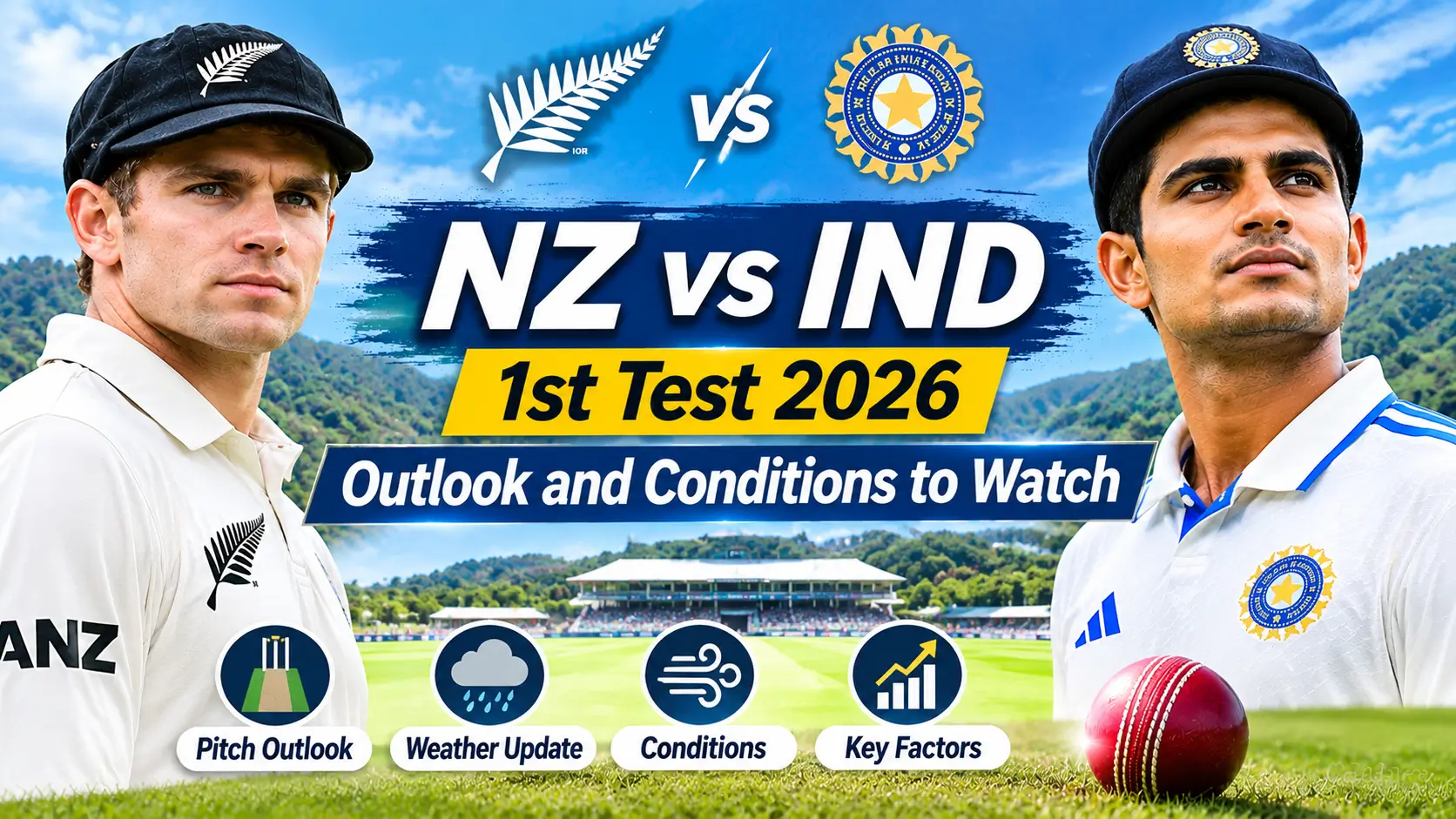
No toss has taken place and there is no confirmed playing XI for either side at the time of this 16 November preview. That rules out confident claims about which team will dominate. New Zealand’s home experience is meaningful, while India’s fast-bowling quality gives the visitors a way to create opportunities in the same conditions.
The most plausible route to a competitive contest is early wickets followed by periods in which disciplined batting becomes easier. India’s ability to control the first hour with Jaiswal, Rahul and Gill is one theme. New Zealand’s ability to rebuild if Bumrah removes a top-order player is another. Both teams have enough depth to recover from a difficult start, but repeated collapses would be costly.
The official BCCI squad update for the New Zealand Tests is the most reliable reference for India’s latest selection change. Check official team announcements at the toss rather than relying on predicted lineups published several days beforehand.
For the pitch, the safest assessment is conditional: a cloudy and damp start may heighten the value of seam bowling, while warmer or calmer spells may help batters build longer innings. A forecast for all five days is not a fact about the pitch itself. Rain interruptions, wind and the condition of the actual strip should be monitored separately.
NZ vs IND 1st Test 2026 – Frequently Asked Questions
When does the NZ vs IND 1st Test 2026 begin?
The first Test begins on Thursday, 19 November 2026, at 3:30 AM IST. It is scheduled to run through 23 November at the Basin Reserve in Wellington.
Where will India and New Zealand play the first Test?
The venue is Cello Basin Reserve, Wellington, New Zealand. The second Test is scheduled in Christchurch later in November.
Who are the captains for the first Test?
Shubman Gill is India’s Test captain and Tom Latham is New Zealand’s captain. These are the announced squad leaders, not predictions.
Is Rishabh Pant available for India?
The BCCI confirmed on 14 November that Pant had joined the Test squad in Wellington. Whether he plays is subject to the final team selection at the toss.
Is Kuldeep Yadav in India’s Test squad?
No. The BCCI released Kuldeep for domestic cricket and added Gurnoor Brar to the 16-member Test squad on 14 November.
Are the playing XIs confirmed?
No. The lineups in this preview are predicted XIs of exactly 11 players each. New Zealand also has fitness assessments involving Blundell, Conway and Ravindra.
Conclusion: A Major Test of Technique at Basin Reserve
The NZ vs IND 1st Test 2026 is more than a follow-up to the ODI series. It brings a fresh contest between pace attacks, two captains balancing risk and control, and selection questions that cannot be settled until the toss. India have strengthened their fast-bowling options, while New Zealand are waiting on key fitness updates.
For the best understanding of this match, watch the first session, assess the actual pitch and compare the confirmed XIs with these pre-match projections. The side that protects wickets against the new ball and sustains pressure across sessions will be better placed, but the outcome remains open.